


Current Projects
The Jordan Laboratory works directly with the UC Davis Veterinary Center for Clinical Trials to manage research studies focused on skin and ear diseases of dogs, cats, horses, and other companion animal species.
Current studies we are actively recruiting for include:
Canine Cutaneous Epitheliotropic T-Cell Lymphoma
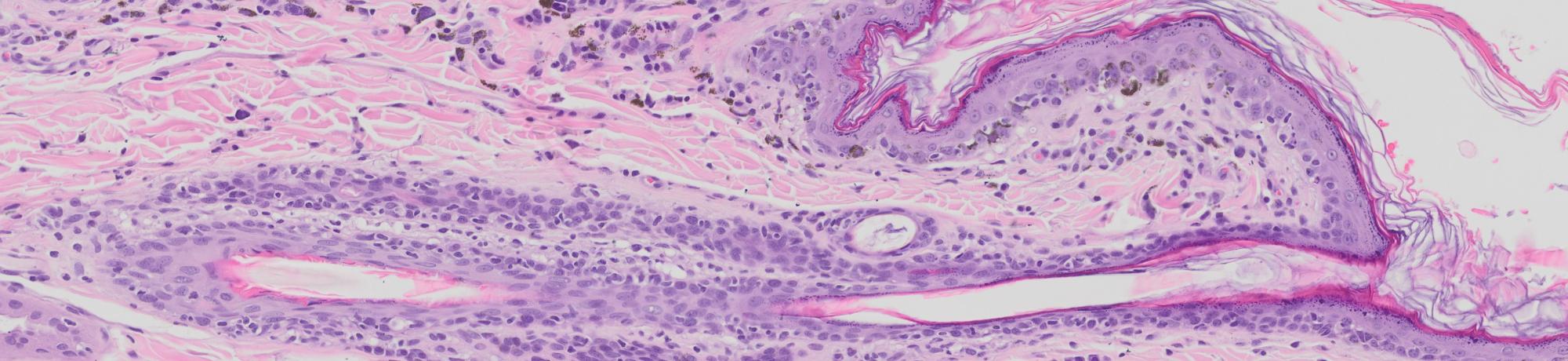
Cutaneous epitheliotropic T-cell lymphoma (CETCL) is a devastating form of skin cancer that primarily affects older dogs with a median age of 10-11 years of age at the time of diagnosis. In this disease, cancerous white blood cells known as “lymphocytes” infiltrate the skin resulting in moderate to severe itch, rash, plaques, tumors, ulcers, loss of pigmentation, crusting, scaling, and hair loss. Sadly, dogs with this form of skin cancer often have a poor prognosis and are euthanized within 6-12 months of diagnosis despite treatment with traditional chemotherapeutic drugs. The development of novel therapies for managing this aggressive skin cancer has been hindered by our very limited understanding of how and why this disease occurs and remains an unmet medical need in clinical practice.
Funded by the UC Davis Center for Companion Animal Health
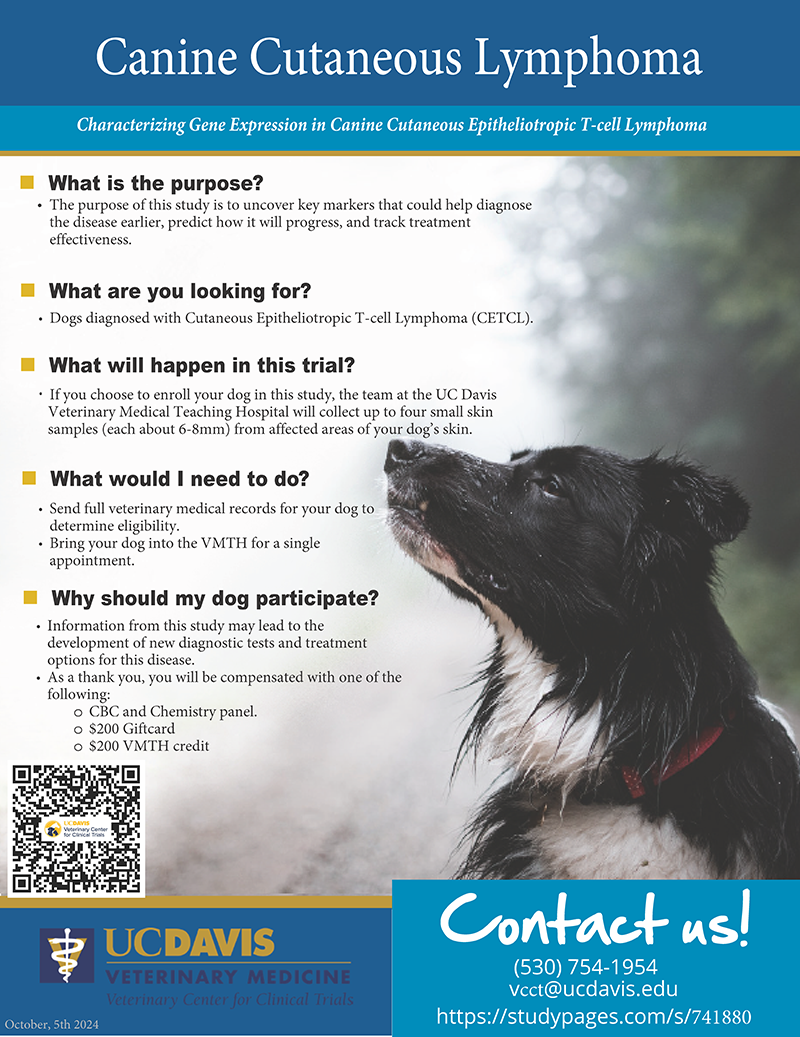
We are currently recruiting samples from dogs with cutaneous lymphoma, as well as from healthy control dogs, to better understand how and why this form of skin cancer occurs in dogs. The long-term goal of our work is to support the development of safe, specific, and targeted treatments for cutaneous lymphoma that improves the quality of life and treatment outcomes for canine patients. Please reach out to learn more and see if your dog qualifies for our ongoing studies!
Mechanisms and Management of Itch and Allergic Skin Disease in Cats
Chronic itch is one of the most common health problems affecting pet cats. One of the most common causes of itch in cats are allergic reactions to fleas, food, and/or environmental allergens (i.e., dust mites, mold spores, pollens). Allergic skin diseases are incredibly common and has consistently been listed as one of the top ten reasons for pet insurance claims for cats by Nationwide Pet Insurance. Cats experiencing itch due to allergic skin disease often lick, scratch, chew, bite, or overgroom excessively, which can damage the skin and lead to painful infections. These symptoms can significantly reduce the quality of life of affected cats and create emotional and financial stress for their owners. Unfortunately, treatment options for feline itch are very limited and commonly rely on immunosuppressive medication that may cause serious side effects with long-term use.
We are currently recruiting samples from cats with moderate to severe itch, as well as from healthy control cats, to better understand what drives itch in this species. The long-term goal of our work is to support the development of more safe and effective treatments that improve the health and comfort of cats suffering from itch and allergic skin disease. Please reach out to learn more and see if your cat qualifies for one of our ongoing studies!
Mechanisms and Management of Itch and Allergic Skin Disease in Horses
Itch is one of the most common and frustrating problems affecting horses and can occur in a variety of skin diseases, including scratches, sweet itch, hives, and environmental allergies. Horses with moderate to severe itch often rub, bite, chew, or scratch excessively, leading to hair loss, skin damage, and secondary skin infections. In some cases, affected horses become uncomfortable during riding or work, reducing their quality of life and athletic performance. As a result, chronic itch can have a significant impact on both equine welfare and the owner’s ability to care for and enjoy their horse. Despite its prevalence, treatment options for equine itch remain limited, highlighting the need for research aimed at understanding the underlying causes of itch and developing safe, effective therapies for affected horses. Our research focuses on improving our understanding of the biological mechanisms that drive itch in horses and identifying novel therapeutic approaches that can safely and effectively improve affected horses' quality of life.
Mechanisms and Management of Hives in Horses
Hives, also known as “urticaria”, are one of the most common allergic skin conditions in horses. Affected horses develop raised, often widespread swellings within the skin that may appear suddenly and can vary from mild cosmetic changes to severe outbreaks associated with itch, discomfort, and reduced performance. While hives are frequently linked to allergic reactions, identifying the underlying trigger can be difficult, and many horses experience recurrent episodes despite extensive investigation.
Managing hives in horses presents unique challenges because there are relatively few medications available that are both effective and practical for long-term use. Oral steroids are often highly effective but may carry risks such as laminitis in susceptible horses, while other treatment options may provide inconsistent results. The challenge is even greater in performance horses, where medication choices are restricted by competition regulations and withdrawal requirements. As a result, veterinarians must balance effective disease control with medication safety and compliance, highlighting the need for improved understanding of the causes of equine hives and the development of new treatment options. Our research focuses on understanding the biological mechanisms that result in hives in horses and identifying novel therapeutic approaches that are safe and effective.